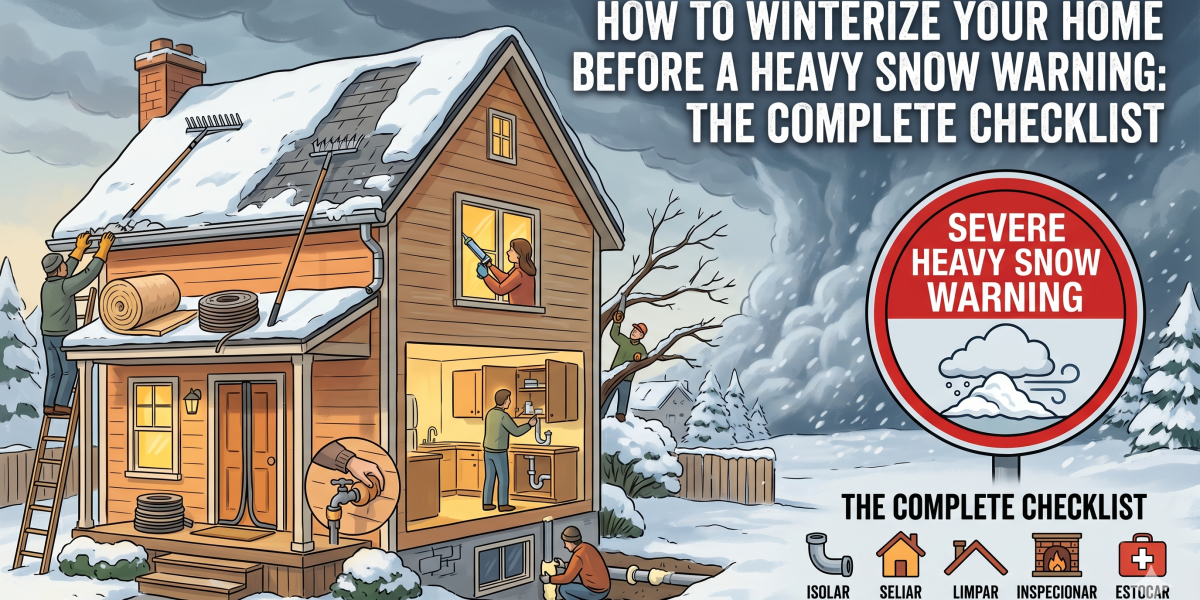
With heavy snow warnings active across Montana, Wyoming, and multiple northern states this week, homeowners have hours — not days — to prepare. Whether you’ve done this before or are facing your first serious winter storm, this room-by-room checklist will protect your home and your family.
1. Start Outside: Your Home’s First Line of Defense
Roof and Gutters
Ice dams — ridges of ice that form at roof edges — cause $14 billion in property damage annually in the US. Prevention starts now: clean gutters of any debris so meltwater can drain freely. If you have an older home, consider adding heat cables along the eave lines before snow falls.
Disconnect and Drain Outdoor Faucets
Frozen outdoor pipes burst with enough force to crack cast iron. Turn off the water supply valve to each outdoor bib, then open the faucet to let remaining water drain out. Store garden hoses in the garage — rubber becomes brittle and cracks in deep freezes.
Clear the Yard
Patio furniture, planters, grills, and decorations become dangerous projectiles in wind-driven snow. Store anything under 50 pounds. For items too heavy to move, strap them down or lay them flat.
2. Protect Your Pipes — The Most Expensive Winter Mistake
Which Pipes Are At Risk?
Pipes in unheated spaces — garage walls, crawl spaces, exterior walls, and uninsulated basements — are most vulnerable. At 20°F (-7°C) or below for six or more hours, uninsulated pipes can freeze and burst.
Quick Pipe Insulation
Foam pipe insulation sleeves cost $1–$3 per 6-foot section at any hardware store and take 5 minutes to install. Wrap all exposed pipes in unheated areas. For emergency prep when supplies are sold out, wrap pipes in old towels and secure with duct tape as a temporary measure.
Let Faucets Drip
For pipes along exterior walls, allow a trickle to run from cold-water faucets during the coldest overnight temperatures. Moving water resists freezing. This method uses only 1–2 gallons of water overnight — far cheaper than a burst pipe.
▶ Watch: Complete Home Winterization Guide — Step by Step
3. Heat Your Home Efficiently During the Storm
Service Your Heating System
Replace your furnace filter now (a clogged filter reduces efficiency by 15% and risks system failure). Set the thermostat no lower than 55°F (13°C) even if you’re away — pipes in the walls need ambient warmth.
Seal Drafts Fast
Every gap lets heated air escape. Run your hand along door frames and window edges in a dark room with a lit incense stick — any smoke movement reveals a draft. Draft stoppers ($8–$15), weatherstripping ($10–$20 per door), and temporary window insulation kits ($25) all deliver immediate results.
Know Your Emergency Heating Options
If your furnace fails during a storm, space heaters are your backup. Only use models with automatic tip-over shutoffs (virtually all modern units). Never use propane, charcoal, or gas-powered devices indoors — carbon monoxide poisoning causes 400 US deaths per year.
4. Emergency Supply Kit for Snowstorms
- 3 days of water (1 gallon per person per day)
- Non-perishable food (canned goods, peanut butter, crackers)
- Manual can opener
- Flashlights and extra batteries
- Battery-powered or hand-crank radio
- First aid kit
- Extra blankets and warm clothing
- Phone charger banks (pre-charged)
- One week of prescription medications
- Cash — ATMs may be offline in extended outages
5. Snow Removal: Do It Right to Protect Your Back and Your Roof
Shoveling causes over 100,000 ER visits annually in North America — most from back injuries, some from cardiac events. Use an ergonomic snow shovel with a curved handle to reduce spinal strain. Push snow rather than lifting when possible. Take breaks every 15–20 minutes.
For roofs: wet snow weighs up to 20 pounds per cubic foot. If you hear unusual creaking, see visible sagging, or doors suddenly won’t open or close, remove snow from the roof immediately using a roof rake from the ground.
6. FAQ — Home Winterization
Q: What temperature do pipes freeze at?
A: Pipes begin to freeze when temperatures drop to 20°F (-6.7°C) or below, especially if they’re in uninsulated spaces and temperatures stay that low for 6+ hours.
Q: How do I thaw a frozen pipe safely?
A: Never use an open flame. Use a hair dryer, electric heating pad, or hot towels. Start near the faucet and work toward the frozen section. If you can’t locate the freeze or water won’t flow after thawing, call a plumber immediately.
Q: Does homeowner’s insurance cover burst pipe damage?
A: Most standard homeowner’s policies cover sudden and accidental water damage from burst pipes, but NOT flood damage. Review your policy for exclusions before storm season.
Q: How much snow can my roof hold?
A: Most residential roofs are built to handle 20 pounds per square foot. Wet, heavy snow can approach this limit with as little as 2–4 feet of accumulation. Ice adds significantly more weight than dry snow.