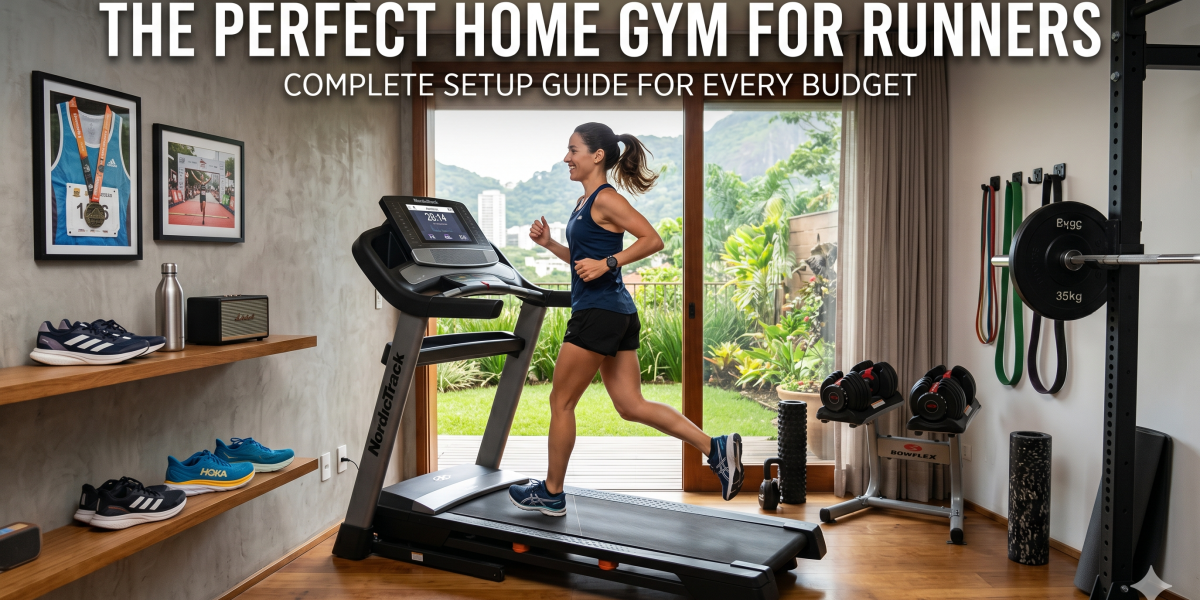
Sabastian Sawe’s stunning performance at the 2026 London Marathon has sparked a fresh wave of running enthusiasm across North America. Whether you’re training for your first 5K or chasing a sub-3-hour marathon, a dedicated home training space makes consistency dramatically easier. Here’s how to set one up.
1. Choose and Prepare Your Space
Room Requirements
A spare bedroom (minimum 10×10 feet), garage corner, or unfinished basement all work well. The non-negotiables: a level floor, adequate ventilation, and ceiling height of at least 7 feet for jump rope and plyometric work. For treadmill placement, you need 3 feet of clearance behind the machine’s back end.
Flooring
Never run on a treadmill directly on hardwood or concrete — vibration damages floors and the machine. Interlocking rubber gym tiles ($1.50–$3 per square foot) provide cushioning, protect floors, and reduce sound transmission. A 10×10 space costs $150–$300 to floor properly.
2. The Cardio Core: Treadmill Selection
Budget Tier: $600–$1,000
The NordicTrack T6.5S and Horizon T101 lead this range. Expect: 0–10% incline, speeds to 10 MPH, and adequate cushioning for up to 10 miles per week. Foldable designs save significant space when not in use.
Mid-Range: $1,200–$2,500
The NordicTrack Commercial 1750 and Sole F80 are runner favorites. Features include: 0–15% incline, 12 MPH max, more robust cushioning systems, and iFit or Bluetooth compatibility for virtual race courses. Suitable for up to 30 miles per week.
High-End: $3,000+
The Peloton Tread, Technogym Run, and Life Fitness T5 deliver commercial-grade durability. If you’re running more than 40 miles per week, the investment in longevity and biomechanics support is justified.
▶ Watch: Complete Home Gym Setup for Runners — All Budgets → https://www.youtube.com/results?search_query=home+gym+setup+for+runners+treadmill
3. Strength Training for Runners
Runners who neglect strength training are 60% more likely to experience injury. Your home runner’s gym should include:
- Resistance bands set ($20–$40): hip bridges, clamshells, lateral band walks
- Adjustable dumbbells ($100–$300): single-leg deadlifts, split squats, rows
- Stability ball ($25–$40): core work, hamstring curls
- Pull-up bar, doorframe style ($30–$60): upper body strength and posture
- Foam roller ($20–$40): daily myofascial release
- Yoga mat ($25–$60): stretching and floor work
4. Recovery Zone: The Overlooked Half of Training
Foam Rolling Corner
Dedicate 4 square feet to recovery: a foam roller, a lacrosse ball for trigger points, and a massage stick. Post-run use for 10–15 minutes reduces next-day soreness by 30–40% in clinical studies.
Compression and Ice
A compression boot set ($200–$500) is an elite runner’s recovery tool now accessible to home users. Alternatively, a $30 compression sleeve kit and a rotating ice/heat protocol handles most recovery needs.
Cool Down TV Corner
A small TV or tablet mount at eye level (while lying on a yoga mat) makes 10 minutes of post-run stretching and breathing feel like a reward rather than a chore. Mount a mirror on one wall for gait and form self-assessment.
5. Technology and Tracking
Your home gym should support your data habits: a GPS watch (Garmin Forerunner, Polar Pacer) pairs with most treadmills via Bluetooth to track all metrics in one platform. Mount a small whiteboard to track weekly mileage — seeing the numbers fill up is powerfully motivating.
6. FAQ — Home Gym for Runners
Q: Is a treadmill or outdoor running better for training?
A: Both are valuable. Treadmills allow precise pace and incline control and are safer in adverse weather. Outdoor running builds proprioception, adapts to terrain, and uses slightly more energy. Ideally, use both. Most elite coaches recommend 60% outdoor, 40% treadmill for urban runners.
Q: How much space do I need for a runner’s home gym?
A: Minimum: 10×8 feet for a treadmill plus a small mat area. Ideal: 12×12 feet includes room for strength work and a recovery zone. A garage half-bay (10×20 feet) is the gold standard for a complete setup.
Q: How loud is a home treadmill? Will it bother neighbors?
A: Modern treadmills produce 60–70 dB at running speed — roughly equivalent to a conversation. Rubber gym tiles and a quality machine significantly reduce vibration transmitted through floors. Apartment dwellers should run before 9 PM to be considerate of neighbors.
Q: What inspired the most new runners to start training in 2026?
A: The 2026 London Marathon’s record-breaking performances, including Sabastian Sawe’s near-world-record time, saw a surge in running app downloads and treadmill searches. Major races consistently create “marathon booms” in public interest in running.