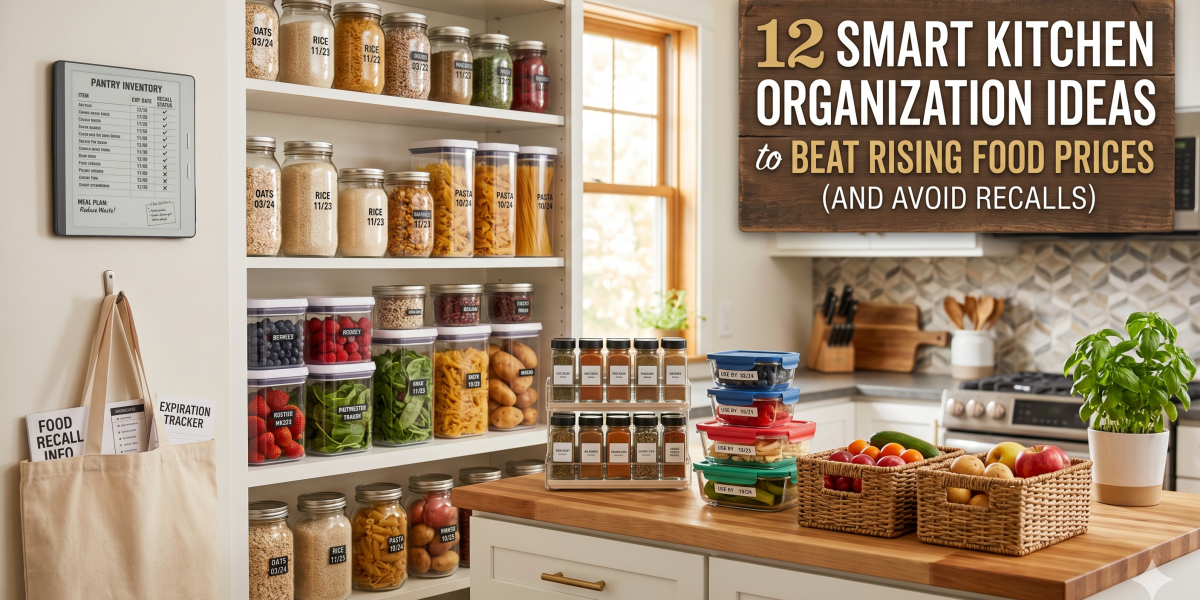
Food prices in Canada and the US have risen significantly over the past two years, and product recalls — like the recent Costco Canada pizza kit recall — are a reminder that knowing what’s in your kitchen matters more than ever. The solution to both problems starts with better kitchen organization.
1. The Pantry Audit: Know Exactly What You Have
The average North American household wastes $1,500 in food annually — primarily because they don’t know what they already own. Before reorganizing, pull everything out of your pantry. Group by category: grains, canned goods, condiments, baking supplies, snacks. Discard anything past its best-by date and check current recall lists for anything you’re unsure about.
Where to Check US and Canadian Food Recalls
US recalls: FoodSafety.gov updates daily. Canadian recalls: healthycanadians.gc.ca/recall. Both sites allow you to sign up for email or text alerts when new recalls are announced — a 2-minute setup that could save you from serving recalled food.
2. First In, First Out (FIFO) System
Grocery stores use this professionally and you should too: when you bring home new food, push older items to the front. New items go to the back. This one habit alone can cut household food waste by 30–40% according to the USDA. Use a small piece of painter’s tape to mark the purchase date on items without obvious expiry dates.
3. Clear Container System for Dry Goods
Decanting pasta, rice, flour, nuts, and cereals into clear, airtight containers ($25–$60 for a starter set) does four things: you can see what you have at a glance, food stays fresh up to 3× longer, pests can’t access your pantry, and your shelves look organized.
What to Buy
OXO Pop containers are the most praised in this category and go on sale regularly. The 10-piece starter set ($60–$80) handles most pantry essentials. Budget option: IKEA 365+ containers ($2–$6 each) work well and look clean on open shelving.
▶ Watch: Pantry Organization to Waste Less and Save More → https://www.youtube.com/results?search_query=pantry+organization+save+money+food+prices
4. Meal Planning Station
A dedicated meal planning station on your kitchen wall transforms how your household eats and shops. Mount a weekly calendar ($15–$25), a small whiteboard ($20–$40), and a shopping list pad in one zone near your pantry. Sunday evenings, write the week’s meals and note what you need — you’ll eliminate last-minute expensive purchases.
5. The Freezer as a Money-Saving Tool
Organize by Zone
Divide your freezer into zones: proteins (top shelf or drawer), prepared meals (middle), vegetables and fruit (bottom or door bins), and bread/baked goods (side). Label everything with masking tape and a marker. Without this system, food gets lost, forgotten, and freezer-burned.
Bulk Buying Strategy
During sales, buy proteins in bulk and freeze in meal-sized portions. Vacuum sealer bags ($30–$60 for the device, $15 for 50 bags) extend freezer life from 3 months to 1–2 years. A single well-timed bulk purchase of chicken can save a family $200–$300 per year.
6. Spice and Herb Organization
Most households have 40+ spices, 25% of which are expired and flavorless. Pull everything out, discard anything older than 2 years (most spices; ground spices lose potency fastest), and organize what remains. Uniform jars ($20–$35 for a matching set) on a tiered spice rack or drawer insert mean you never buy double what you already have.
7. Refrigerator Zones for Freshness
- Top shelf: leftovers, ready-to-eat foods, drinks
- Middle shelf: dairy, eggs, deli meats
- Bottom shelf: raw meat (to prevent drip contamination)
- Crisper drawers: high humidity for leafy greens, low humidity for fruits
- Door: condiments, juices, butter (warmest zone — not for eggs or milk)
Following proper fridge zones extends food life by days to weeks and dramatically reduces the risk of cross-contamination from raw proteins.
8. FAQ — Smart Kitchen Organization
Q: What should I do if I bought a recalled product?
A: Stop using it immediately. Check the retailer’s website or the government recall database for specific instructions — most offer refunds or exchanges. Never donate recalled food items.
Q: How much can better kitchen organization really save?
A: Studies suggest the average family can save $1,000–$2,000 per year by reducing food waste through better organization, meal planning, and FIFO inventory management.
Q: How often should I do a pantry audit?
A: Ideally every 3 months, aligned with seasonal meal plan changes. At minimum, do one large audit annually before the holiday season when you’ll be adding the most to your pantry.
Q: What’s the best way to store bread to prevent mold?
A: Counter storage in a bread box is best for 1–3 days. For longer storage, freeze bread and take out slices as needed — they thaw in minutes at room temperature or 30 seconds in a microwave.