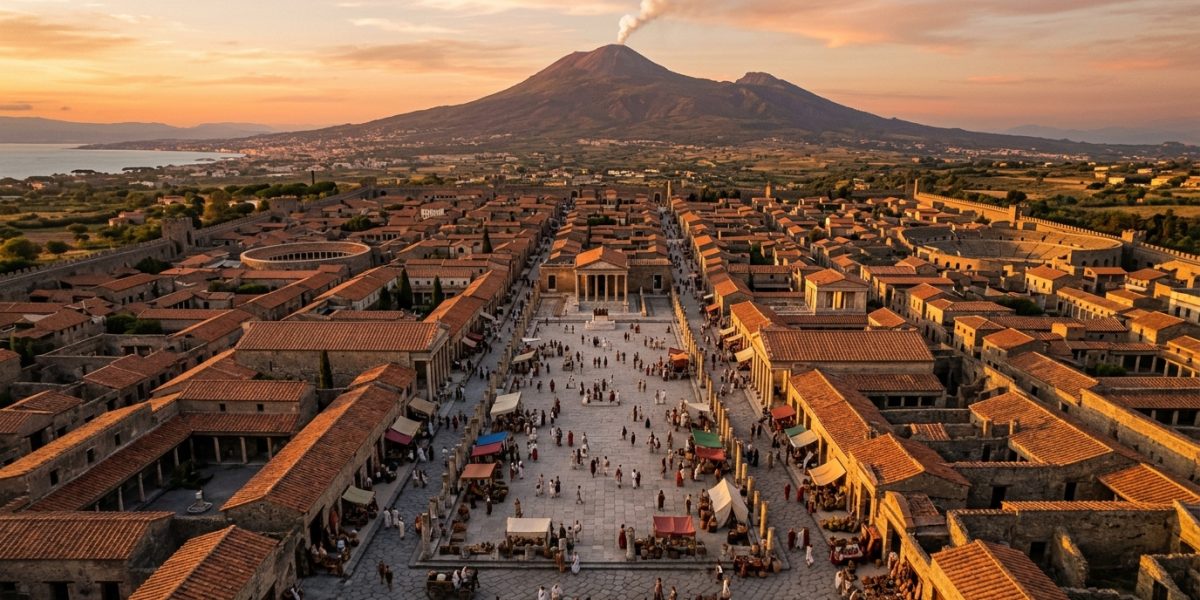
On the morning of August 24, 79 AD, Pompeii was a bustling Roman city of 20,000 people. No one knew it would be their last day. The details historians have reconstructed from ash, artifacts, and carbonized remains make this disaster feel hauntingly present — not like ancient history, but like yesterday.
The Morning Routine Nobody Suspected
Bakeries fired up their ovens before dawn. Archaeologists have found 81 bakeries in Pompeii, many with loaves of bread still carbonized in stone ovens. Street food stalls called thermopolia — the ancient equivalent of a fast food counter — were already serving warm meals.
Graffiti covered the walls. Citizens posted election endorsements, insults, jokes, and love declarations on plastered surfaces throughout the city. On the morning of the eruption, someone had just scrawled a new message near the Forum.
| Aspect of Daily Life | Archaeological Evidence | What It Tells Us |
| Bakeries open | 81 bakeries found, loaves still in ovens | City was mid-morning routine |
| Street food active | Thermopolia with food residue | Vendors serving customers at eruption |
| Gladiator games scheduled | Arena posters on walls | Public was anticipating entertainment |
| Market day | Coins and goods in stalls | Commercial activity at peak |
| Water system running | Intact lead pipes with water | Infrastructure fully operational |
The city’s water aqueduct was running. Public fountains distributed water to the population at regular intervals. The amphitheater had a scheduled gladiatorial event that week — posters advertising the games were still on the walls when excavators arrived 1,700 years later.
The Warning Signs Everyone Missed
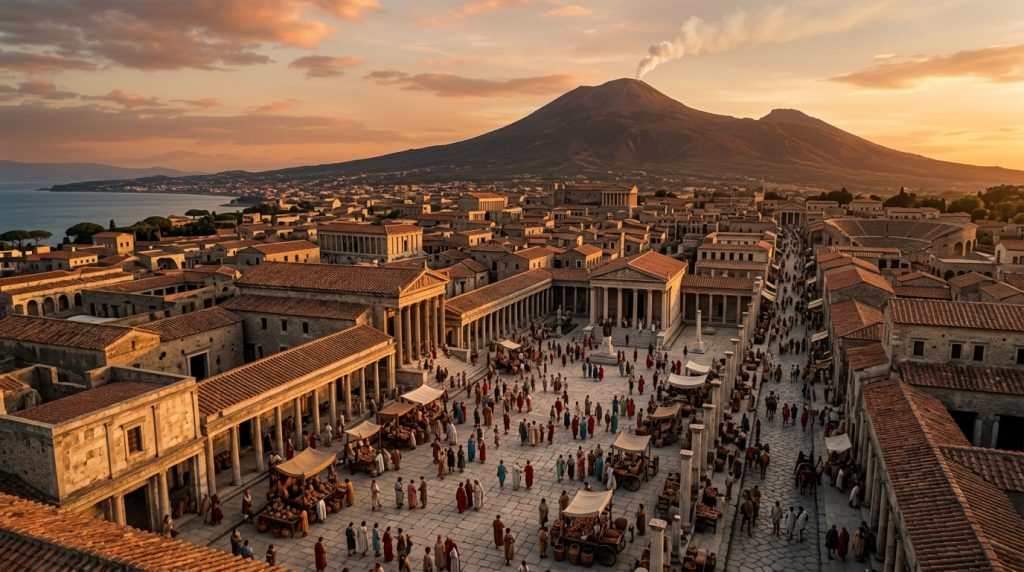
Vesuvius had been giving signals for days. Minor earthquakes rattled the city. Springs and wells began to dry up — a classic sign of volcanic activity underground. Pliny the Younger, who survived and witnessed the eruption from across the bay, wrote in a letter that these signs were dismissed as normal seismic activity.
Roman understanding of volcanoes was primitive. Vesuvius had not erupted in recorded memory. To Pompeians, it was simply a tall, fertile mountain where grapes grew exceptionally well.
| Warning Sign | Days Before Eruption | Modern Interpretation |
| Minor earthquakes | Several days prior | Magma movement underground |
| Wells running dry | 2–3 days before | Groundwater disruption from heat |
| Animal behavior changes | Day before | Infrasonic signals animals detect |
| Strong sulfur smell | Hours before | Gas venting from crater |
| Unusual cloud over summit | Morning of eruption | Eruption column beginning |
The Eruption: A Timeline of 18 Hours
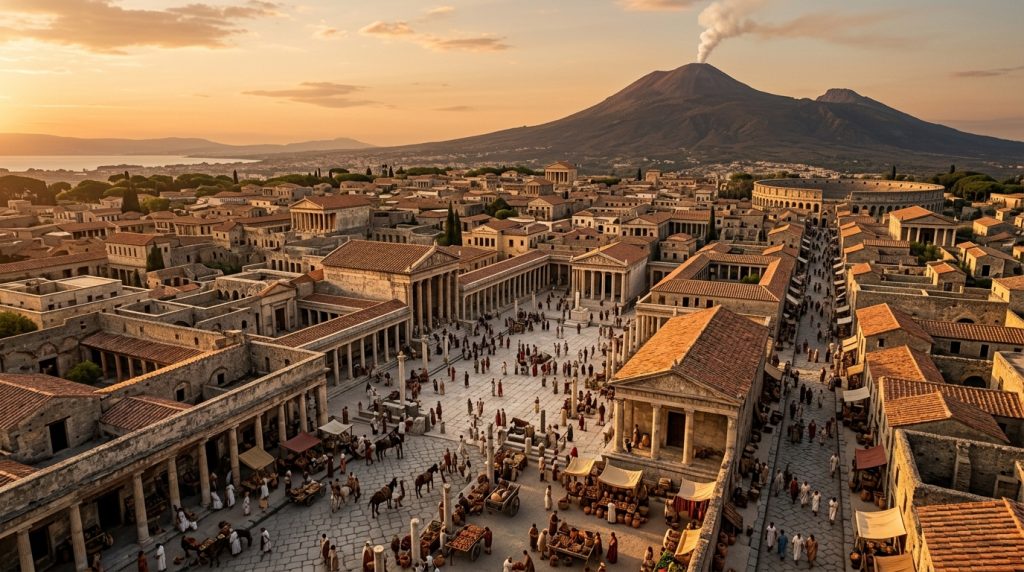
At approximately 1 PM, Vesuvius exploded with the force of 100,000 atomic bombs. A column of superheated ash and gas rose 33 kilometers into the sky. For hours, pumice rained down on the city at a rate that required people to constantly clear their roofs to avoid collapse.
Many fled. Many stayed, thinking the worst had passed. Then, at around 1 AM on August 25, the eruption column collapsed, sending pyroclastic flows — clouds of 300°C superheated gas and debris — rushing down the mountain at 700 kilometers per hour. Pompeii had no chance.
What the Bodies Tell Us
The famous plaster casts of Pompeii victims were created by pouring plaster into the cavities left by decomposed bodies in the ash. The poses reveal people shielding their faces, hugging loved ones, and curling into fetal positions — not from the heat, but from the pyroclastic surge that suffocated them in seconds.
One man died with his hand over his mouth. A family of four was found together. A dog still chained to a wall had climbed its chain trying to escape the rising pumice. These are not historical abstractions. They are moments frozen forever.
| Category of Remains | Number Found | Key Discovery |
| Human plaster casts | Over 1,000 | Reveal final moments and postures |
| Animal remains | ~50 confirmed | Dog, horses, pigs, chickens found |
| Carbonized food items | Hundreds | Bread, figs, dates, fish sauce |
| Intact buildings | ~1/3 of city | Some roofs and upper floors preserved |
| Frescoes still vivid | Thousands | Color preserved by ash seal |
Why This Story Works So Well for Google Discover
The Pompeii story hits every Discover trigger: vivid human emotion, historical curiosity, strong visual assets, and a narrative that builds tension. Readers share it because it feels personal — not like a textbook, but like a story happening to real people.
For content creators, reconstructing the last normal day format works because it grounds tragedy in the ordinary. The audience feels proximity to history, which drives engagement, shares, and time-on-page — all signals that feed Discover’s recommendation engine.
Frequently Asked Questions (FAQ)
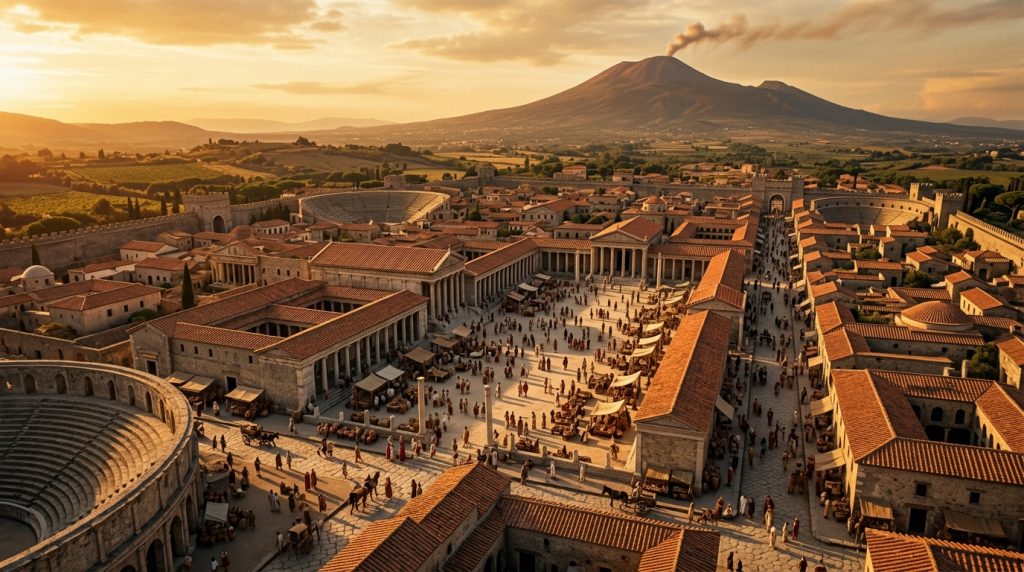
What time did Vesuvius erupt in 79 AD?
The main eruption began around 1 PM on August 24, 79 AD, though minor earthquakes preceded it by several days. The deadly pyroclastic flows struck Pompeii around 1 AM on August 25.
How many people died in the Pompeii eruption?
Estimates range from 2,000 to 16,000 people. Archaeologists have confirmed at least 1,150 human remains, but many victims may have escaped or their remains may not have been preserved.
How long did it take to bury Pompeii?
The city was covered in approximately 4–6 meters of volcanic material over a period of 18–20 hours, from the initial eruption column to the final pyroclastic surges.
Why were Pompeii victims preserved so well?
The rapid burial by fine volcanic ash created an anaerobic environment that slowed decomposition. When the organic material decayed, it left a void that could be filled with plaster to reveal exact body shapes.
Was there a warning before the Pompeii eruption?
Yes — there were minor earthquakes and tremors in the days prior, and some citizens evacuated. However, Romans had no concept of Vesuvius as a volcano, and many stayed believing the danger had passed.
Can you visit Pompeii today?
Yes. The Pompeii Archaeological Park is open to the public near Naples, Italy. It is one of the most visited archaeological sites in the world, with over 3 million visitors annually.


