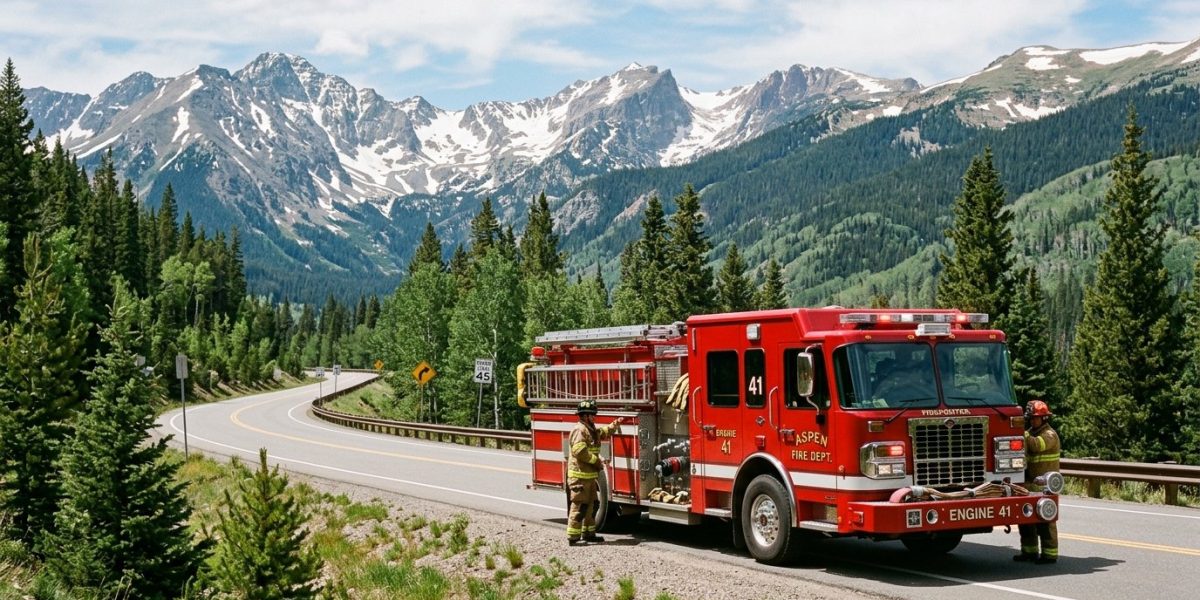
Emergency managers in Larimer County downgraded a mandatory evacuation order to a voluntary warning after firefighters contained a small brush fire measuring roughly two acres south of Estes Park. Officials confirmed that forward motion of the blaze was halted, allowing crews to secure perimeter lines near residential areas.
The incident originally triggered immediate safety alerts for households located along highway corridors near the town. According to reporting by the Daily Camera, emergency officials adjusted the threat level after ground crews made rapid progress suppressing active flames during favorable atmospheric conditions.
Crews Halt Spread of Small Brush Fire in Larimer County
Local authorities first alerted residents to smoke plumes drifting south of the mountain community early in the afternoon. Firefighters from multiple surrounding districts responded alongside county emergency personnel to establish defensible lines around nearby structures. Reporting from the Denver Gazette noted that evacuation orders were initially issued out of an abundance of caution due to gusty winds in the mountainous terrain.
As containment lines held, officials downgraded the order to an evacuation warning. The Colorado Springs Gazette reported that emergency responders continued mop-up operations late into the evening to eliminate hot spots that could spark under shifting wind patterns.
What does an evacuation warning mean for residents?
An evacuation warning indicates that while the immediate risk to life and property has decreased, potential danger remains in the area. Residents who returned to their properties should remain vigilant and prepared to leave on short notice if fire activity increases.
Under local safety standards, households subject to an evacuation warning should keep emergency supply kits packed. Emergency management agencies recommend keeping vehicle fuel tanks at least half full, gathering essential medications, securing vital legal documents, and making transportation plans for household pets and livestock.
How can people check current emergency alert status?
Residents and visitors in Larimer County can stay informed by registering for official public safety notices through local emergency communication networks. The county uses the NOCO Alert system to send geographic text messages, voice calls, and email warnings directly to cell phones during wildland fire events.
- Official Notification System: Register mobile numbers and addresses at nocoalert.org to receive location-specific notifications.
- Emergency Non-Emergency Line: Call the Larimer County Sheriff’s Office non-emergency line at 970-498-5100 for non-urgent updates.
- Immediate Danger: Dial 911 immediately if you spot uncontained flames or visible smoke near residential structures.
What should visitors to the Estes Park area expect?
Estes Park serves as a primary gateway to Rocky Mountain National Park, drawing heavy vehicular traffic throughout the summer and fall seasons. While primary access roads into the town remain open, local law enforcement agencies may maintain temporary lane closures or speed reductions along southern access routes to accommodate emergency equipment.
Travelers heading toward the area are advised to monitor road conditions through the Colorado Department of Transportation portal at cotrip.org before departing. Visitors should avoid stopping along shoulders to photograph emergency vehicles, as blocked roadways hamper response times for water tenders and crew transports.
What safety precautions prevent local fire starts?
Wildfire danger in Northern Colorado remains a persistent concern due to dry timber, low atmospheric humidity, and seasonal wind gusts. Local fire districts enforce strict regulations regarding open burning, campfire management, and outdoor equipment usage to prevent accidental ignitions.
- Campfire Restrictions: Extinguish all campfires with water until coals are cold to the touch. Never leave a campfire unattended.
- Tire and Vehicle Safety: Ensure trailer chains are secured and do not drag on asphalt, which can create sparks along highways.
- Equipment Operations: Avoid mowing dry grass or using power tools outdoors during hot, windy afternoon hours.
Fire officials will maintain monitoring over the burn footprint throughout the week to monitor ground temperatures and prevent re-ignition.
Ia


